In today’s fast-changing world, global trade is no longer limited to large multinational companies. Small businesses, startups, manufacturers, and entrepreneurs in India are now actively participating in international markets. With digital platforms, easier communication, and rising global demand for Indian products, this is one of the best times to explore international trade opportunities.
However, global markets are constantly evolving. Business owners who understand international trade trends can stay ahead of competitors, find profitable opportunities, and reduce risks. Whether you are already involved in import-export or planning to start, knowing these trade trends can help you make smarter business decisions.
In this article, we will explore the most important global trade trends every Indian business owner should know in 2026 and beyond.
Why Understanding Global Trade Trends Matters
Global trade trends directly impact pricing, demand, shipping costs, customer preferences, and market opportunities. Businesses that adapt quickly to these changes often grow faster and become more competitive.
For Indian entrepreneurs, understanding international trends can help in:
- Finding profitable export products
- Identifying new markets
- Reducing supply chain risks
- Improving customer satisfaction
- Increasing international sales
- Building long-term business partnerships
India is becoming a major player in global trade, and business owners who stay informed can benefit greatly from this growth.
1. Rising Demand for “Made in India” Products
One of the biggest global trade trends is the increasing popularity of Indian products worldwide. Countries are actively looking for alternatives to traditional manufacturing hubs, and India is becoming a trusted supplier.
Products gaining strong international demand include:
- Textiles and garments
- Handicrafts
- Organic food products
- Spices
- Pharmaceuticals
- Engineering goods
- Leather products
- Jewelry
- IT and digital services
How Businesses Can Benefit
The Indian government is also supporting exports through various schemes and initiatives. This creates excellent opportunities for new exporters.
- Focus on product quality and packaging.
- Build a strong online presence.
- Register on B2B platforms.
- Research international buyer demand
- Obtain necessary export certifications
Indian businesses that maintain consistency and professionalism can build strong global reputations.
2. Growth of E-Commerce Exports
Cross-border e-commerce is growing rapidly. Today, businesses can sell products globally without opening offices in foreign countries.
Platforms like:
- Amazon Global Selling
- Alibaba
- Etsy
- eBay
have made international selling easier for Indian entrepreneurs.
Small businesses can now reach customers in countries like the USA, UK, UAE, Australia, and Canada directly from India.
Benefits of E-Commerce Exports
- Lower startup investment
- Access to global customers
- Faster market entry
- Digital payment systems
- Easier product marketing
This trend is especially beneficial for small manufacturers, artisans, and home-based businesses.
3. Supply Chain Diversification is Increasing
Many global companies are reducing dependency on a single country for sourcing products. Businesses worldwide now prefer diversified supply chains to avoid disruptions.
This shift is creating major opportunities for Indian suppliers and manufacturers.
Why This Trend Matters
Global events such as pandemics, geopolitical tensions, and shipping disruptions have shown the risks of relying on one market.
As a result:
- International buyers are searching for reliable Indian suppliers
- India is becoming a preferred sourcing destination
- Manufacturing opportunities are increasing
Indian businesses that offer quality products, timely delivery, and transparent communication can attract long-term international buyers.
4. Sustainability and Eco-Friendly Products are in High Demand
Consumers worldwide are becoming more environmentally conscious. Buyers now prefer sustainable and eco-friendly products.
This trend is growing strongly in Europe, North America, and other developed markets.
Popular Sustainable Products
- Organic products
- Recycled materials
- Eco-friendly packaging
- Handmade products
- Natural fabrics
- Chemical-free goods
Businesses that focus on sustainability often gain better customer trust and higher brand value.
Tips for Indian Businesses
- Use eco-friendly packaging
- Highlight sustainability in marketing
- Obtain environmental certifications
- Reduce waste in manufacturing
Sustainability is no longer just a trend; it is becoming a global business standard.
5. Digital Payments and FinTech are Transforming Trade
International payments are becoming faster, safer, and more convenient thanks to financial technology (FinTech).
Businesses now use:
- Online payment gateways
- International banking apps
- Digital invoicing systems
- Currency conversion tools
These technologies reduce transaction delays and improve cash flow management.
Advantages for Indian Entrepreneurs
- Faster international payments
- Better payment tracking
- Reduced paperwork
- Lower transaction costs
- Improved financial transparency
Understanding digital payment systems is essential for businesses involved in import-export activities.
6. Free Trade Agreements (FTAs) are Creating New Opportunities
India is signing trade agreements with multiple countries to improve international trade relations.
These agreements help businesses by:
- Reducing import-export duties
- Increasing market access
- Improving trade conditions
- Lowering costs for exporters
Countries involved in trade partnerships often prefer doing business with each other because products become more affordable.
What Businesses Should Do
- Stay updated on new trade agreements
- Research products with reduced tariffs
- Explore new international markets
- Consult export experts when needed
Businesses that understand FTAs can gain major pricing advantages in global markets.
7. Technology and AI are Changing International Trade
Artificial Intelligence (AI) and automation are transforming global trade operations.
Businesses now use technology for:
- Market research
- Customer support
- Supply chain management
- Demand forecasting
- Inventory tracking
- Translation services
AI tools help businesses work faster, reduce errors, and improve decision-making.
Example
A small Indian exporter can now use AI-powered tools to:
- Find international buyers
- Analyze market trends
- Create marketing content
- Improve customer communication
Technology is making global trade more accessible even for beginners.
8. Faster Logistics and Smart Shipping Solutions
Shipping and logistics are becoming smarter with digital tracking systems and improved global transportation networks.
Businesses can now monitor shipments in real-time and improve delivery planning.
Important Logistics Trends
- Real-time shipment tracking
- Automated warehouses
- Faster customs clearance
- Smart inventory systems
Efficient logistics improve customer trust and business reputation.
Tips for Indian Exporters
- Partner with reliable freight forwarders
- Compare shipping costs regularly
- Use shipment tracking tools
- Understand international shipping regulations
Good logistics management can significantly improve customer satisfaction.
9. Growing Importance of Branding in International Markets
Global buyers are no longer focused only on price. They also value branding, presentation, and trust.
A strong brand helps businesses stand out in competitive markets.
Key Branding Elements
- Professional website
- Quality product images
- Consistent packaging
- Clear company profile
- Customer reviews
- Social media presence
Businesses with strong branding often attract better international buyers and long-term partnerships.
10. Demand for Personalized and Niche Products
Customers worldwide increasingly prefer unique and customized products instead of mass-produced items.
This trend creates opportunities for Indian businesses specializing in:
- Handmade crafts
- Customized gifts
- Ethnic fashion
- Organic beauty products
- Regional specialty foods
Niche markets often offer higher profit margins because competition is lower.
How to Succeed in Niche Markets
- Focus on product uniqueness
- Tell your brand story
- Understand customer preferences
- Offer customization options
Indian culture, craftsmanship, and creativity provide a huge advantage in niche international markets.
Challenges Indian Businesses Should Prepare For
While global trade offers many opportunities, there are also challenges businesses should understand.
Common Challenges
- International competition
- Currency fluctuations
- Shipping delays
- Trade regulations
- Quality standards
- Documentation requirements
Businesses that prepare properly and stay informed can overcome these challenges successfully.
Tips for Indian Business Owners to Stay Competitive
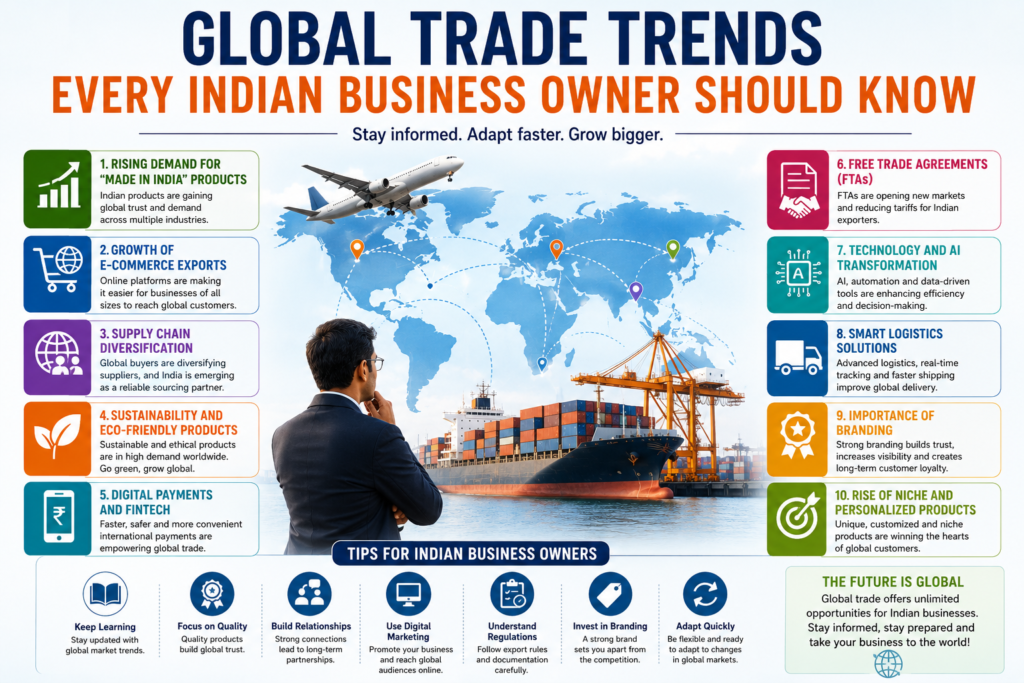
Here are some practical ways to stay ahead in global trade:
1. Keep Learning
International trade changes quickly. Stay updated through business news, trade websites, and market research.
2. Focus on Product Quality
Quality products build trust and increase repeat orders.
3. Build International Relationships
Good communication and professionalism help create long-term partnerships.
4. Use Digital Marketing
Social media and SEO can help attract global customers.
5. Understand Export Documentation
Proper paperwork reduces delays and legal issues.
6. Invest in Branding
A strong brand creates customer confidence.
7. Adapt Quickly
Businesses that adjust to trends faster often succeed globally.
The Future of Global Trade for Indian Businesses
India’s position in global trade is expected to grow significantly in the coming years. Government support, digital transformation, and rising international demand are creating massive opportunities for Indian entrepreneurs.
Businesses that focus on quality, innovation, sustainability, and technology will have the best chances of long-term success.
Even small businesses can now compete internationally with the right strategy and market understanding.
Global trade is no longer only for large corporations. With the right knowledge and preparation, Indian entrepreneurs can build successful international businesses from anywhere in the country.
Conclusion
Global trade is evolving rapidly, and Indian businesses are in a strong position to benefit from these changes. From rising demand for Indian products to digital exports and sustainable business practices, there are countless opportunities for entrepreneurs willing to adapt and grow.
Understanding global trade trends helps businesses make smarter decisions, reduce risks, and discover profitable markets. Whether you are a beginner or already involved in import-export, staying informed about international trade trends is essential for long-term success.
The future of global business belongs to those who are flexible, technology-driven, and customer-focused. Indian entrepreneurs who embrace these changes can create powerful opportunities in the international market.
FAQs
1. Why is global trade important for Indian businesses?
Global trade helps Indian businesses reach international customers, increase profits, and expand market opportunities.
2. Which Indian products are most in demand globally?
Products like textiles, spices, pharmaceuticals, handicrafts, leather goods, and organic products are highly in demand internationally.
3. How can small businesses start exporting from India?
Small businesses can start by researching products, obtaining export licenses, using B2B platforms, and partnering with logistics providers.
4. What role does technology play in global trade?
Technology improves communication, payments, logistics, market research, and customer management in international business.
5. What are the biggest challenges in international trade?
Major challenges include shipping delays, international competition, regulations, and maintaining product quality.